Notes
01 / Searching
My work often begins before I enter a physical space.
I search through satellite images, digital maps, photographs and other traces that can be found online. I look for places that appear abandoned, overlooked or no longer in use, sometimes comparing images from different points in time to understand how a site has changed.
This process can take a long time. It is partly research and partly speculation: trying to understand a place from a distance before encountering it physically, and imagining what might still be present once I arrive.
02 / Entering
Encountering a place in person changes the relationship to it.
I usually spend time observing before deciding what to document or examine. I move through the site slowly, paying attention not only to obvious objects but also to spatial arrangements, surfaces, traces of use, damage, dirt and things that might initially appear insignificant.
Rather than approaching a place as something that can be fully understood, I treat each visit as a temporary encounter with a space whose history remains incomplete.
03 / Recording
I use different methods to record a site, depending on what I encounter there.
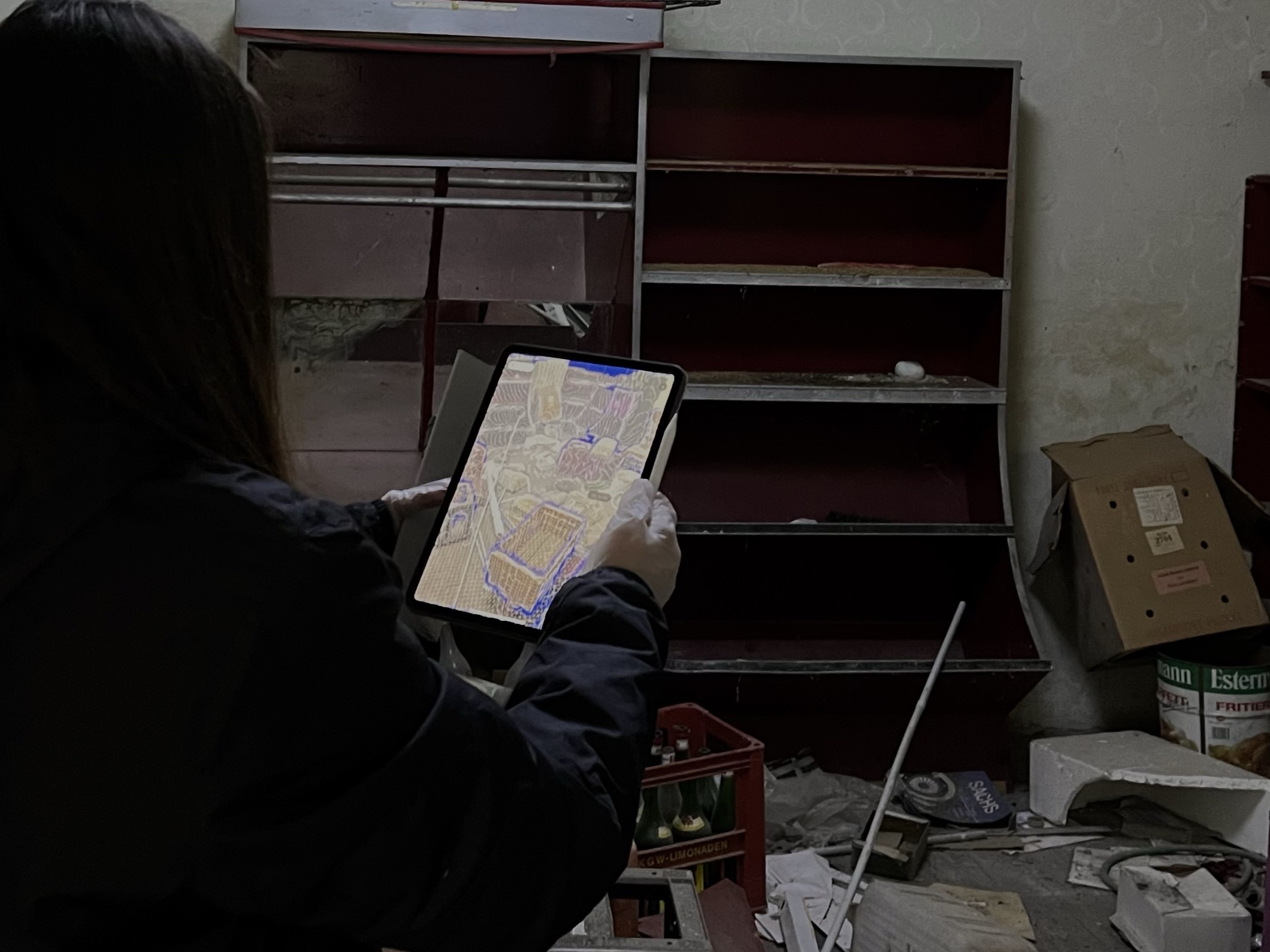
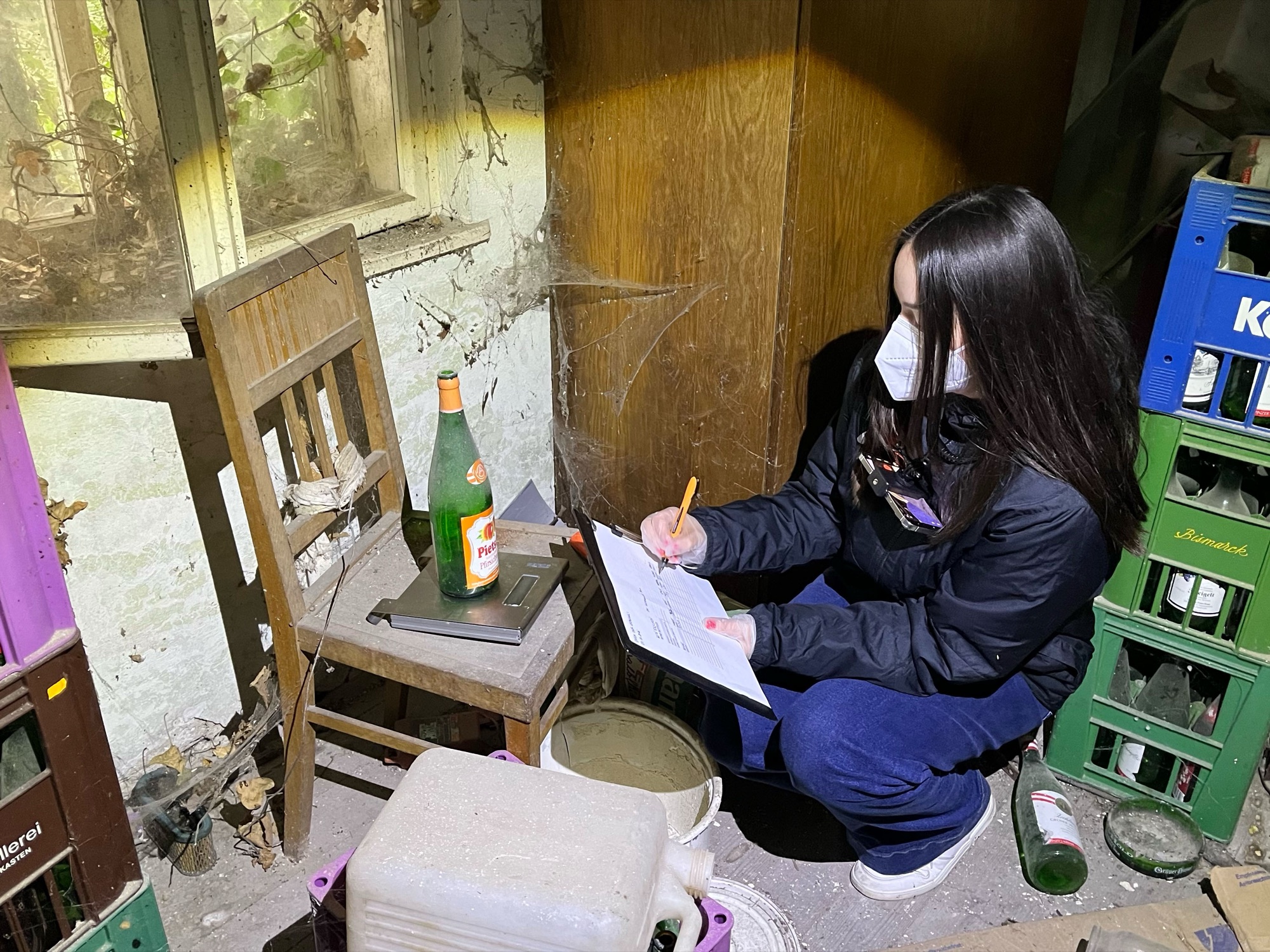
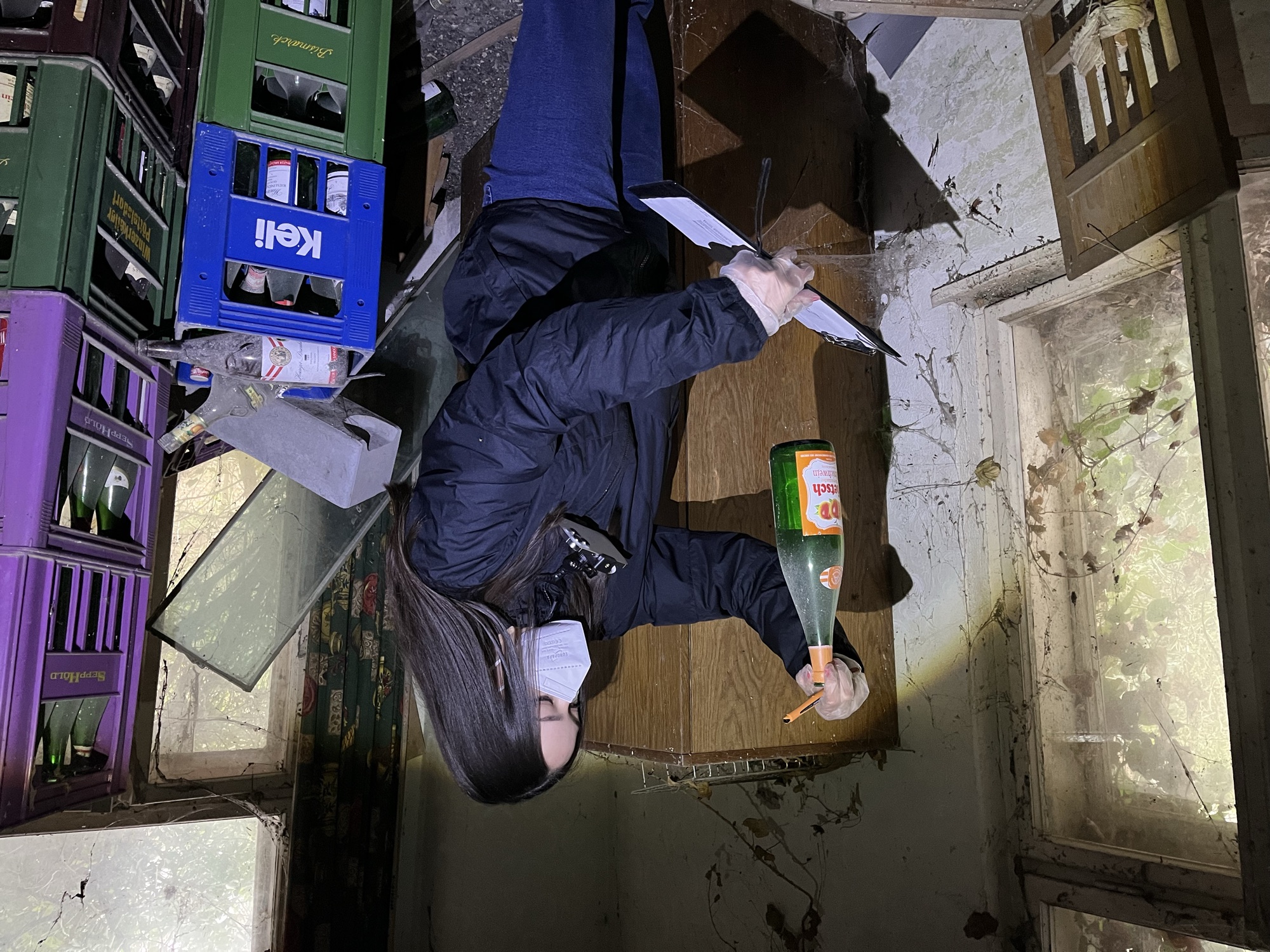
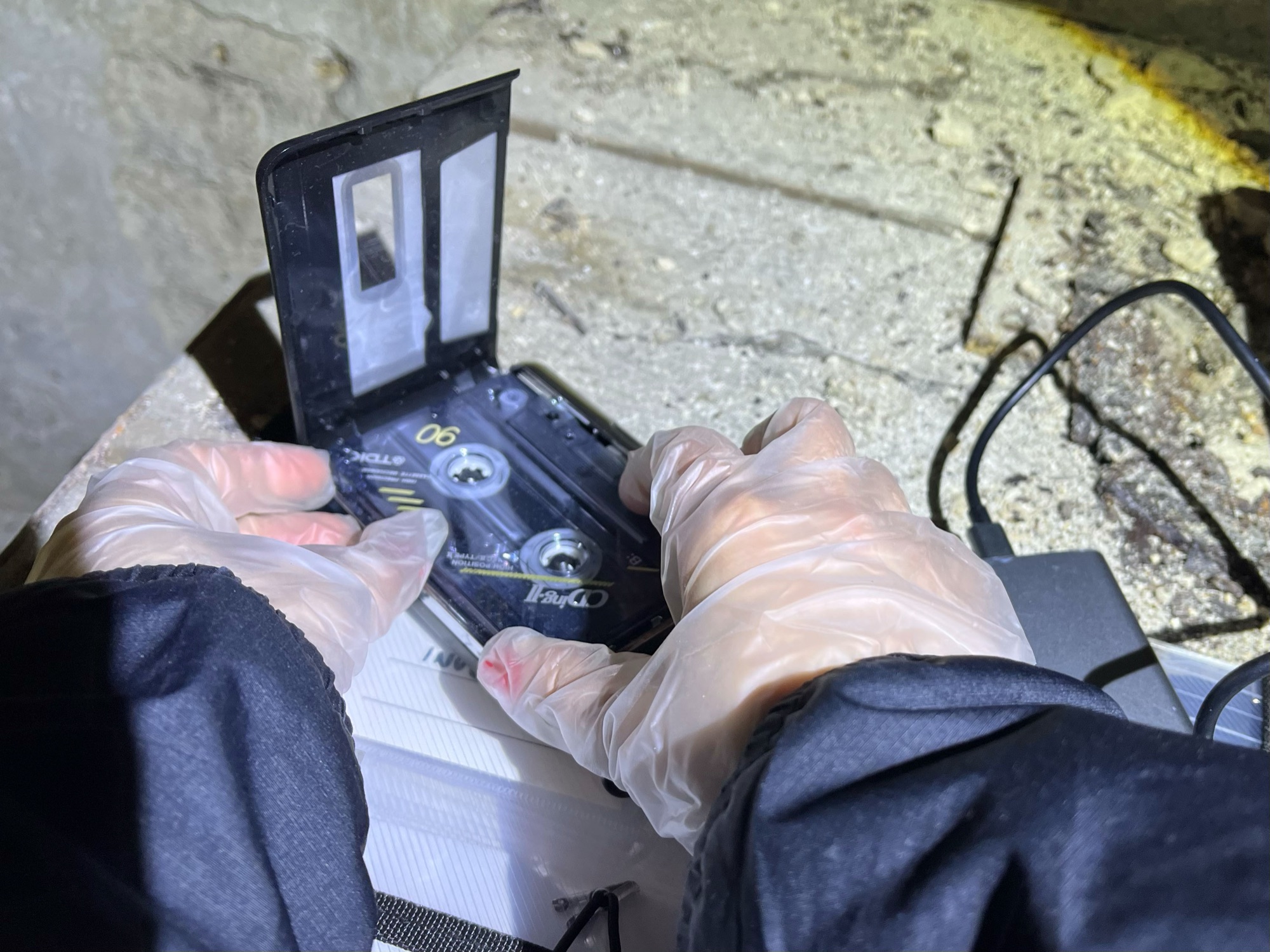
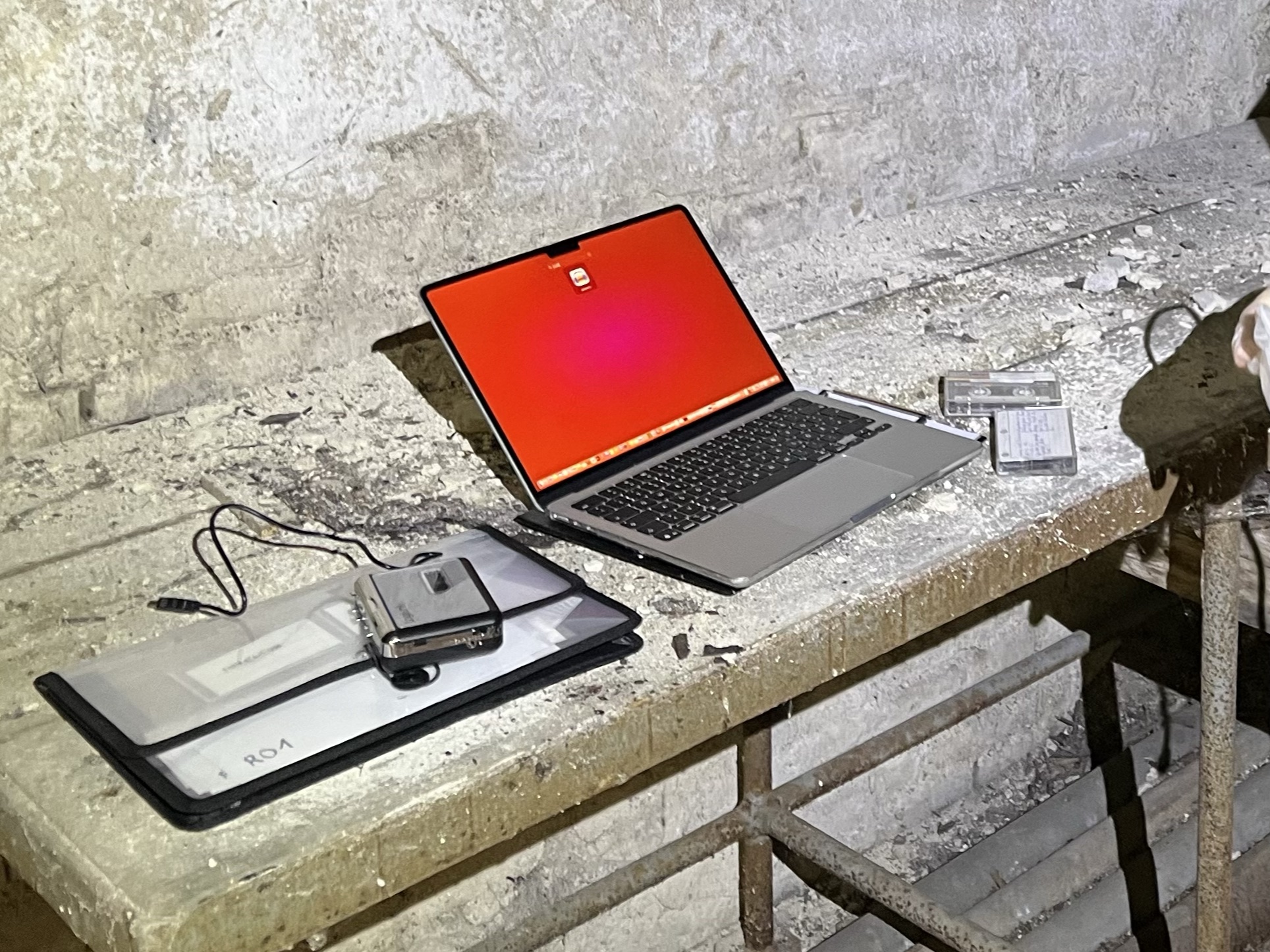
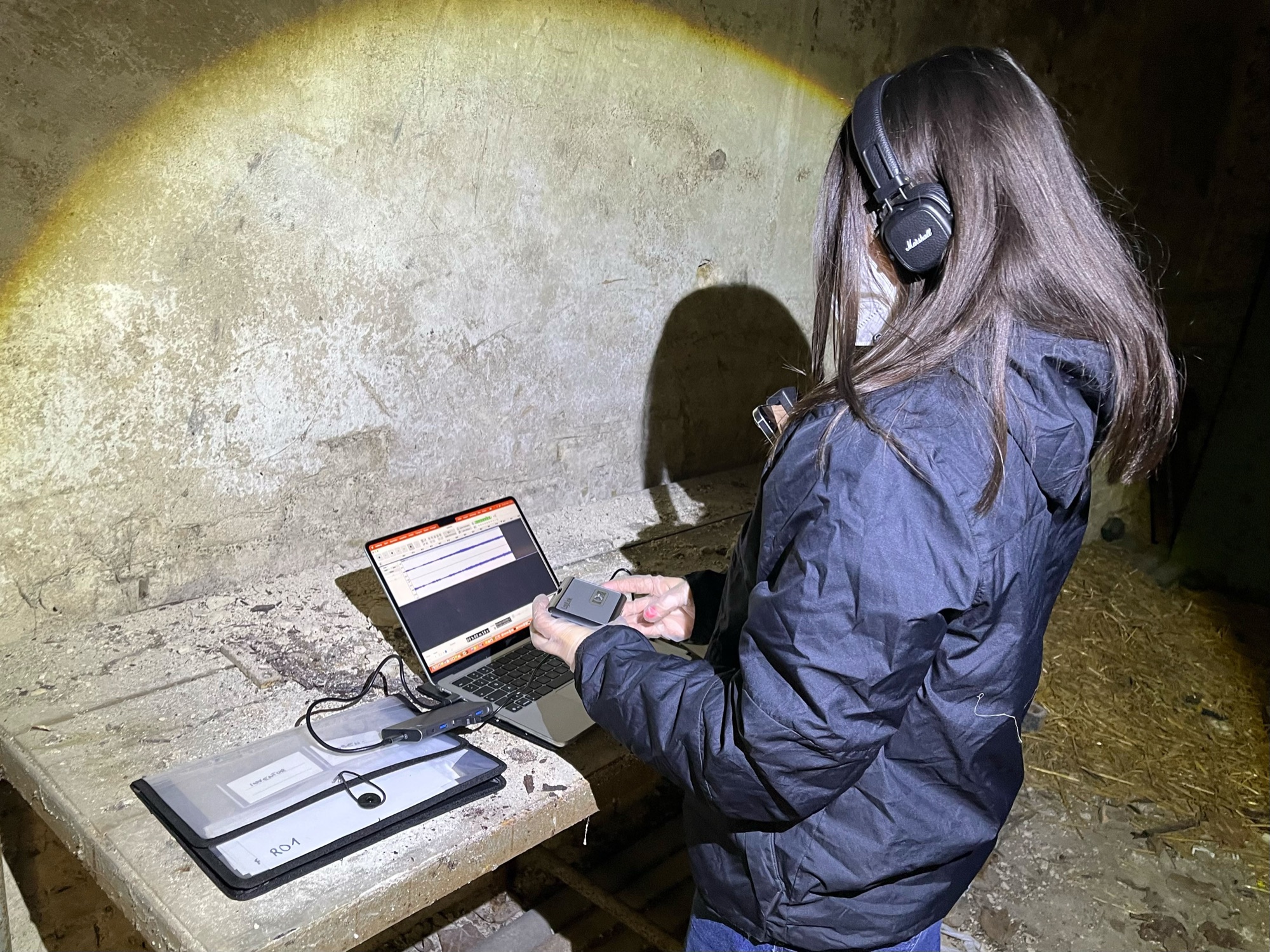
Photographs, video and 3D scans capture spatial structures and objects, while notes, measurements and other forms of documentation allow me to focus on details that might otherwise disappear within an overall image of the place.
No recording is neutral or complete. A 3D scan contains gaps and errors. A photograph excludes everything outside its frame. A description reduces a physical situation to language.
I am interested in these limitations as much as in the information that is preserved.
04 / Sampling
Some traces cannot be captured through images or scans alone.
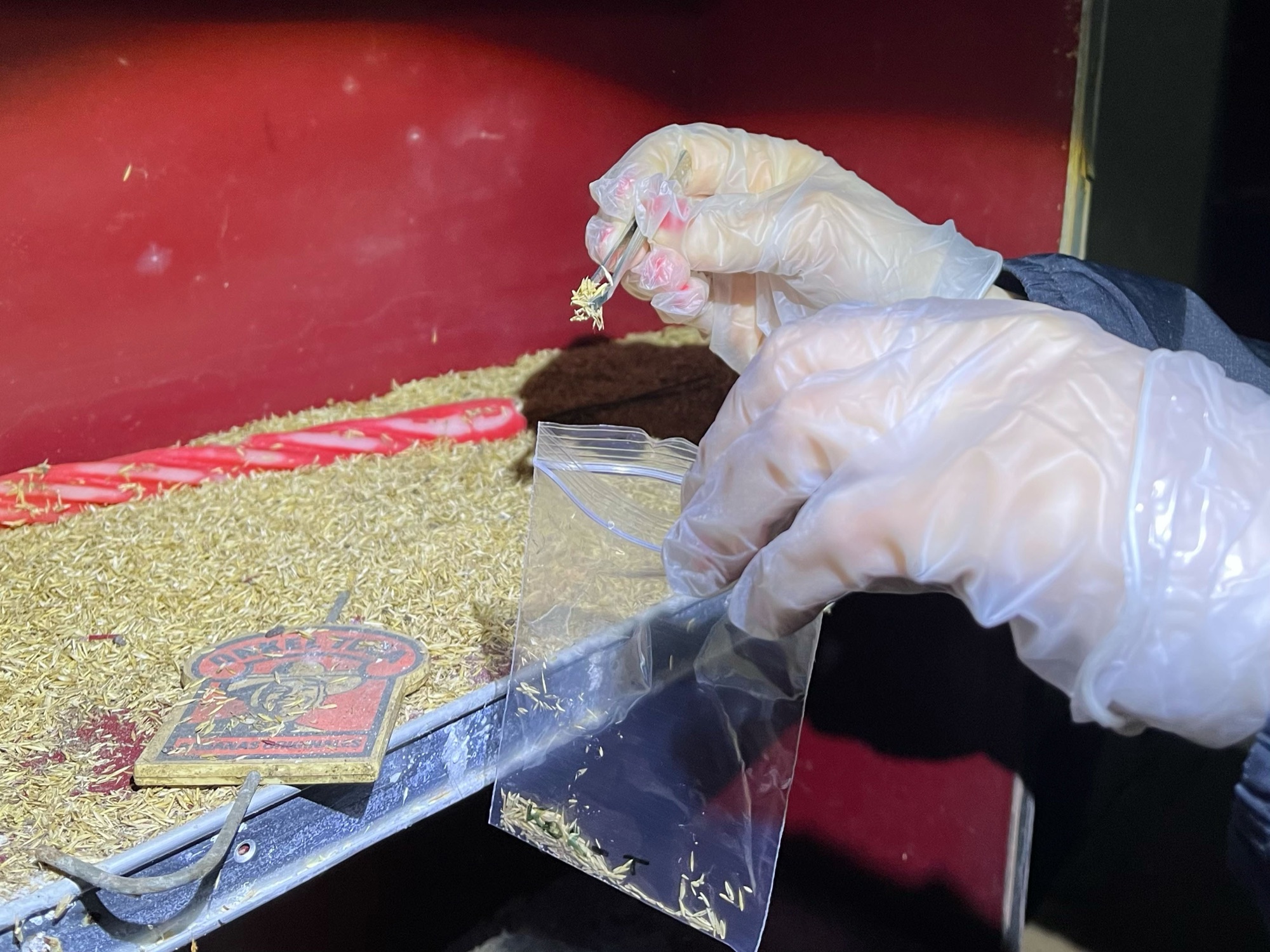
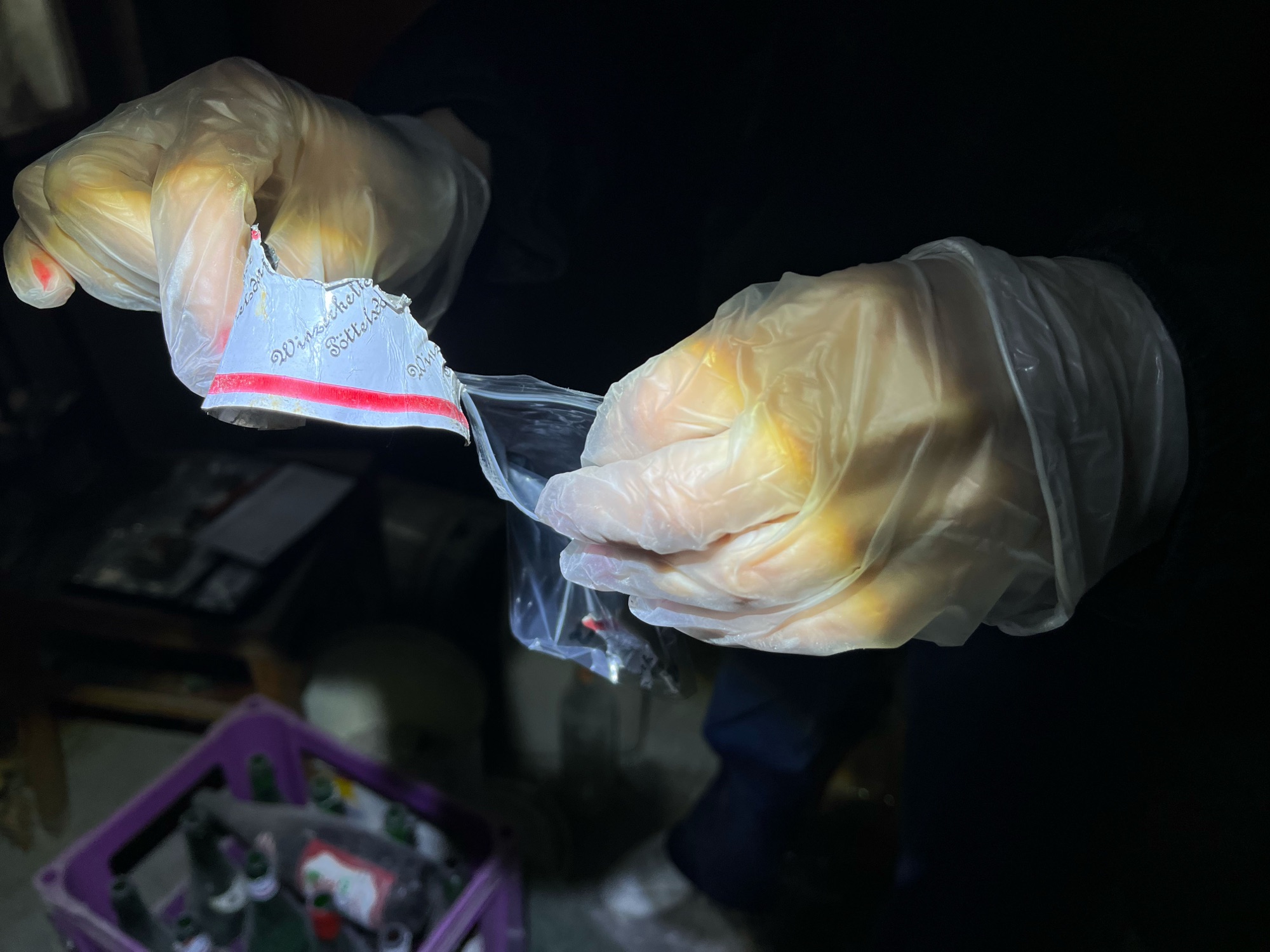
Depending on the site and the work, I collect small samples of materials or ephemeral traces such as dust, dirt or smells. These samples allow aspects of a place to be examined separately from their original surroundings.
Sampling is not an attempt to preserve a site completely. Instead, it raises questions about what happens when something temporary, overlooked or difficult to grasp is removed from its context, categorized and treated as material worth keeping.
The attempt to preserve something often makes its instability more visible.
05 / Organizing
Much of my work involves sorting what has been recorded or collected.
Objects, rooms, samples and other traces are assigned numbers, categories or positions within databases and inventories. These systems borrow from administrative, scientific and archival methods, but they do not produce a complete or objective account of a place.
Every system requires decisions about what becomes a category, what receives attention and what remains outside of it.
By applying precise structures to materials that might otherwise be considered insignificant, I am interested in how classification can change their perceived value.
06 / Translating
The material gathered from a site eventually moves into other forms.
A room can become a 3D model. An object can become an entry in a database. Dust can become a sample. A smell can be stored temporarily. Spatial information can become an interface through which someone else navigates.
I think of these processes less as reconstruction than as translation.
Something is preserved, but something is also lost, simplified or transformed each time a place moves from one medium or system into another. The resulting work does not attempt to replace the original site. It creates another version of it: incomplete, mediated and shaped by the methods used to record it.
Increasingly, I use interactive systems to make this process accessible to others. Instead of presenting one fixed reconstruction, I am interested in creating structures that can be searched, navigated and explored, allowing different fragments of a place to be encountered in different ways.
07 / Photos and videos
08 / Acknowledgements
- Renate
- Julian
- Adrian
- Jakob
- <3